Hidden Costs in Canadian PHSP Administration Fees
Actual costs include provincial taxes and fixed charges beyond the advertised percentage.
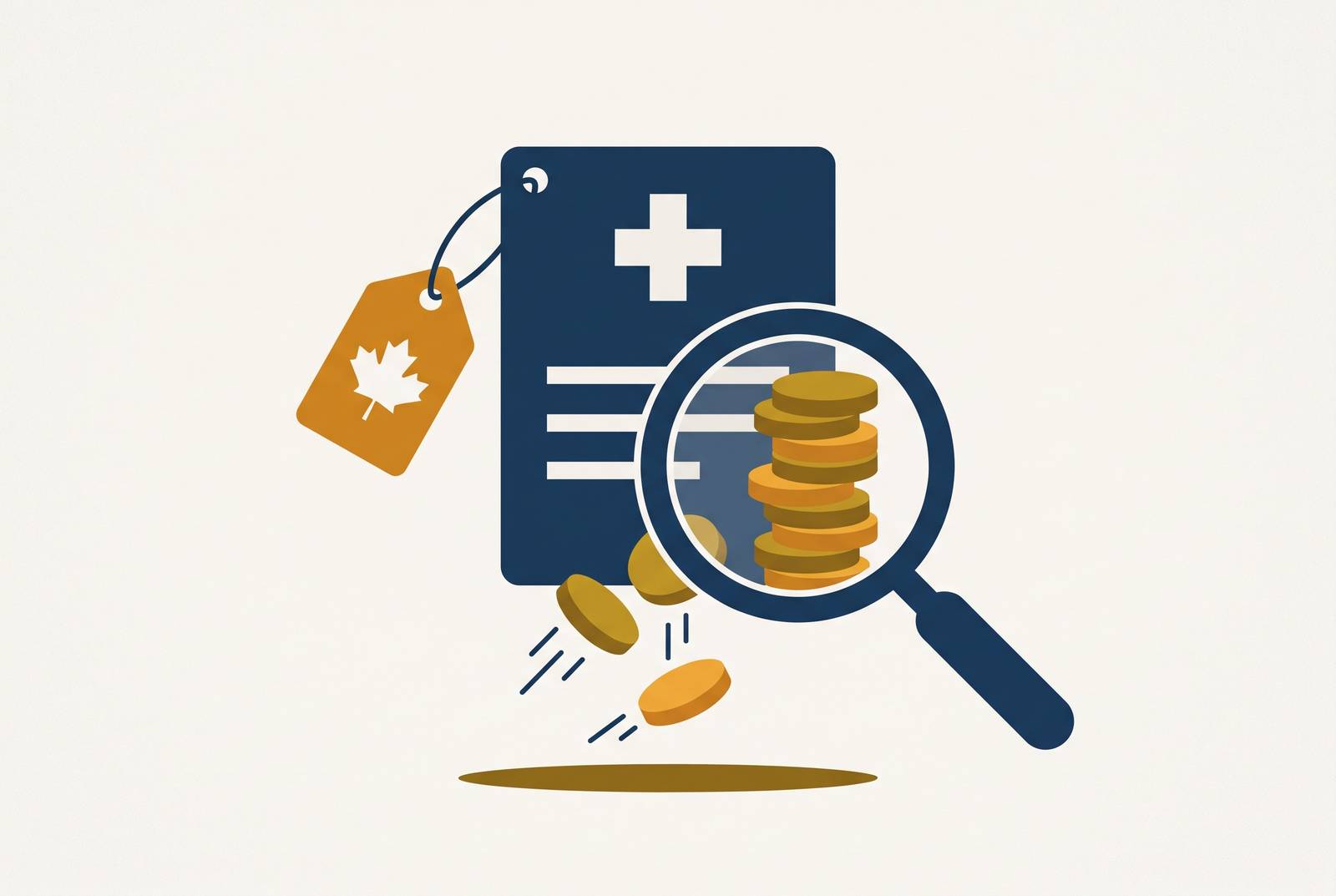
A pay-as-you-go HSA for Canadian small businesses can fund health and dental reimbursements without monthly insurance premiums, but its advertised administration fee is not its total cost. The real bill depends on provincial taxes, fixed charges and the plan’s tax status. For an incorporated consultant comparing providers, the lowest-cost choice depends on those layers as well as the percentage charged on claims.
What a PHSP actually is and how the money flows
A Private Health Services Plan, or PHSP, is an employer-funded arrangement commonly marketed as a Health Spending Account or Health Care Spending Account. The pay-as-you-go version reimburses approved expenses. It is not a personal savings account. Although it is not traditional insurance, the arrangement must still be “in the nature of insurance” under CRA rules.
The business sets a benefit limit for each employee or employee class. An employee pays an expense and submits the receipt for review against the plan’s terms and eligible-expense rules. Under this model, there are no monthly premiums or deductibles, and the employer funds claims when they are approved. The business also pays the provider’s charges.
Why the headline administration fee understates the real cost
Administration fees commonly run at roughly 5–10% of approved claims, but that percentage prices only one part of the arrangement. It does not settle the total bill. Setup charges, annual fees and provincial levies can add to the claim-processing fee, and taxes can apply to different parts of the transaction.
There is also a less visible cost layer, namely the risk that an incorrectly structured plan fails CRA scrutiny. A low processing rate saves little if the plan loses its intended tax treatment. The useful distinction is between the advertised rate, the total cash paid to operate the plan and the tax result the business actually receives.
Ontario's three-layer provincial tax stack on top of federal rules
Nuviolife’s Ontario HSA guide, published 2026-08-12, identifies three charges for Ontario self-insured plans, including Retail Sales Tax on benefits paid, insurance premium tax and HST on the administrator’s fee, or on contributions for a funded plan. For an unfunded arrangement, RST and insurance premium tax apply to claims paid, while HST applies to the administration fee.
Ontario does not have a parallel provincial HSA definition or registry. Instead, its taxes sit on top of the federal PHSP rules. A plan can meet the federal requirements and still attract all three charges.
Recovery also changes the final cost to the business. A GST/HST-registered corporation can recover the HST on the administration fee as an input tax credit, but it cannot recover the RST or insurance premium tax. Businesses not registered for GST/HST absorb all three. An Ontario comparison therefore needs to distinguish what the provider invoices from what remains a cost after any available recovery.
Quebec's provincial taxable-benefit treatment and what it means in practice
Quebec creates a different kind of gap between the headline price and the plan’s effective value. Employer-paid PHSP coverage can generate a provincial taxable benefit even when the reimbursement is non-taxable federally. The employee can therefore face a tax cost. A description that says only “tax-free reimbursement” misses that provincial distinction and overstates what a Quebec employee keeps.
Revenu Québec calculates the taxable value for plans not backed by insurance using benefits paid and administration costs, pro-rated by the employee’s days of coverage, less employee contributions during the year. The administration fee enters that calculation too. It is not merely an expense on the employer’s invoice. This treatment affects the employee’s provincial tax exposure as well as the employer’s year-end reporting. For a business with employees in different provinces, one plan description does not necessarily mean one tax outcome.
Fixed fees — setup charges and annual fees — and how they affect plans with modest claim volumes
Fixed fees take a larger share of spending when claims are modest. Unlike a per-claim charge, a setup fee does not shrink because employees submit fewer receipts. An annual maintenance charge behaves the same way. In a low-use first year, those charges may exceed the amount paid in claim-processing fees. That can reverse the apparent advantage of a lower advertised percentage.
Trusted Advisor describes a one-time setup fee plus applicable taxes as a cost separate from per-claim administration. EasyHSA states that it charges no sign-up fee, employee enrollment or change fee, annual fee, contract termination fee, upfront deposits or transaction fees. Those exclusions are useful comparison terms. Each contract needs its own reading. Setup and annual charges differ from one provider to the next, so the comparison must use each provider’s own terms.
Some providers also charge for changing plan terms or benefit levels during the year. Growing businesses that expect to add employees or change coverage classes need to factor in those charges. Any inactivity or maintenance charge in the contract belongs in the comparison, even though it does not appear in the per-claim rate.
Why self-administering to avoid fees trades one cost for a larger one
CRA’s insurance-nature test applies whether a provider administers the plan or the business handles it itself. A defensible arrangement needs proper documentation and a process that separates eligible employment benefits from personal or shareholder spending. With self-administration, a business that lacks consistent records and arm’s-length processing can save on fees but face a risk of reassessment.
EasyHSA describes its administrator’s role as reviewing receipts for veracity and eligibility before invoicing. That adjudication is work the employer is paying someone to perform. It also gives the administration fee a purpose beyond moving money. Comparing providers only on price leaves out how claims are assessed and how the plan’s requirements are documented.
A plan may still fail to comply with the rules when a business hires a provider. It can support the structure, but it cannot substitute for qualifying employment arrangements or eligible expenses. The practical comparison is between the fee and the compliance work it buys. Avoiding that fee is not a saving if the business also loses the controls needed to defend the reimbursements.
How eligibility structure affects the true cost of a plan before any fee is charged
Owner-employees can qualify for a PHSP, but benefits must arise from employment. Salary and dividends are not interchangeable for this purpose. An owner receiving only dividends faces a significant risk that the benefit will be treated as a shareholder benefit. T4 salary income helps show that the owner has the required employee status.
The same distinction affects who participates when a corporation has arm’s-length employees. EasyHSA requires at least one employee class containing at least one arm’s-length employee to be included in that situation. A plan reserved for shareholder-employees risks a different tax characterization. Its enrollment criteria also require employment-contract language establishing the PHSP obligation for a single shareholder-employee corporation. Under those criteria, sole proprietors must have at least one arm’s-length employee enrolled.
These are not details a cheaper administrator can erase. When a plan qualifies, reimbursements are generally non-taxable to employees federally, and the business can generally deduct its costs. If the plan is set up incorrectly, those tax benefits can be lost, or the reimbursements may be treated as a shareholder benefit.
What CRA-eligible expenses the plan can cover, and what the all-or-substantially-all test means for plan design
Participation is only one part of qualification. The plan must also direct all or substantially all of its benefits to CRA-eligible medical expenses. Its coverage cannot simply follow whatever the employer wants to reimburse. General wellness spending or other non-eligible items can put the annual test at risk. The distinction is between an expense that sounds health-related and one that meets the applicable eligibility rules.
An employer that includes non-eligible expenses may jeopardize the tax treatment for the whole plan year, rather than merely pay an extra processing charge on a disputed receipt. The exposure can include loss of the deduction and reassessment of reimbursements made under the plan. The scope of coverage has to fit the rules that make the reimbursement arrangement tax-efficient.
Is a PHSP or group insurance better for an incorporated business?
Group insurance charges a fixed monthly premium whether employees use their benefits or not. A pay-as-you-go PHSP ties claims spending to approved reimbursements instead. Cost Plus states that its PHSP has no monthly premiums and that businesses do not pay for coverage they do not use or need. That model can cost substantially less in a low-claim year. The advantage still depends on adding fixed fees and provincial charges to the claims bill.
Group insurance buys something different through risk pooling. It can cover life and disability risks that a PHSP does not, and it offers pooled protection against large, unpredictable drug costs. A PHSP may reimburse eligible drug expenses, but it is not equivalent protection against that financial risk. Group insurance also has administration costs and renewal increases that are largely outside the employer’s control. Neither model wins on every cost measure.
Ontario’s tax stack can narrow the gap when claims are consistently high, because provincial charges accumulate with benefits paid. Claim volume, location and risk tolerance therefore shape the comparison. Many employers use both models. A group plan protects against high-cost insured events, while a PHSP pays day-to-day expenses the group plan excludes or underpays. That combination reflects the different jobs the two arrangements perform.
A checklist for reading a PHSP provider's full cost disclosure
A transparent provider will willingly disclose its full fee schedule, provincial tax treatment and qualification requirements before enrollment. The practical test is a written cost breakdown. For a business expecting annual claims, the available information does not establish which named provider has the lowest total cost. A defensible comparison needs provider-specific rates, fixed charges and the business’s provincial treatment.
First, a business needs to know whether there is a one-time setup fee and whether the quoted amount includes applicable taxes. The second question asks if annual maintenance or plan administration costs are charged on top of the per-claim rate. These distinguish startup cost from ongoing overhead. They also help a business check for inactivity charges, policy-change fees and exit costs, which some providers may not charge.
Third, a business needs to know whether Ontario RST, insurance premium tax and HST are itemized, and whether Quebec taxable-benefit treatment is explained where relevant. Quebec’s employee tax consequence is not just another provider invoice line. Fourth, a business needs to know whether the administration fee applies to submitted claims or only approved claims. EasyHSA states that its fee applies to approved claims, a distinction that affects cost when a claim is rejected.
Fifth, a business needs to know whether the documentation satisfies the insurance-nature test and includes the necessary employment-contract language for shareholder-employees. A provider’s answer should explain the HSA arrangement. The best providers surface the costs upfront because their fee structure has nothing to hide.