Compliance Implications of Approval-Triggered PHSP Billing for Canadian Employers
Employers must document plan terms before billing to qualify for tax-free PHSP treatment.
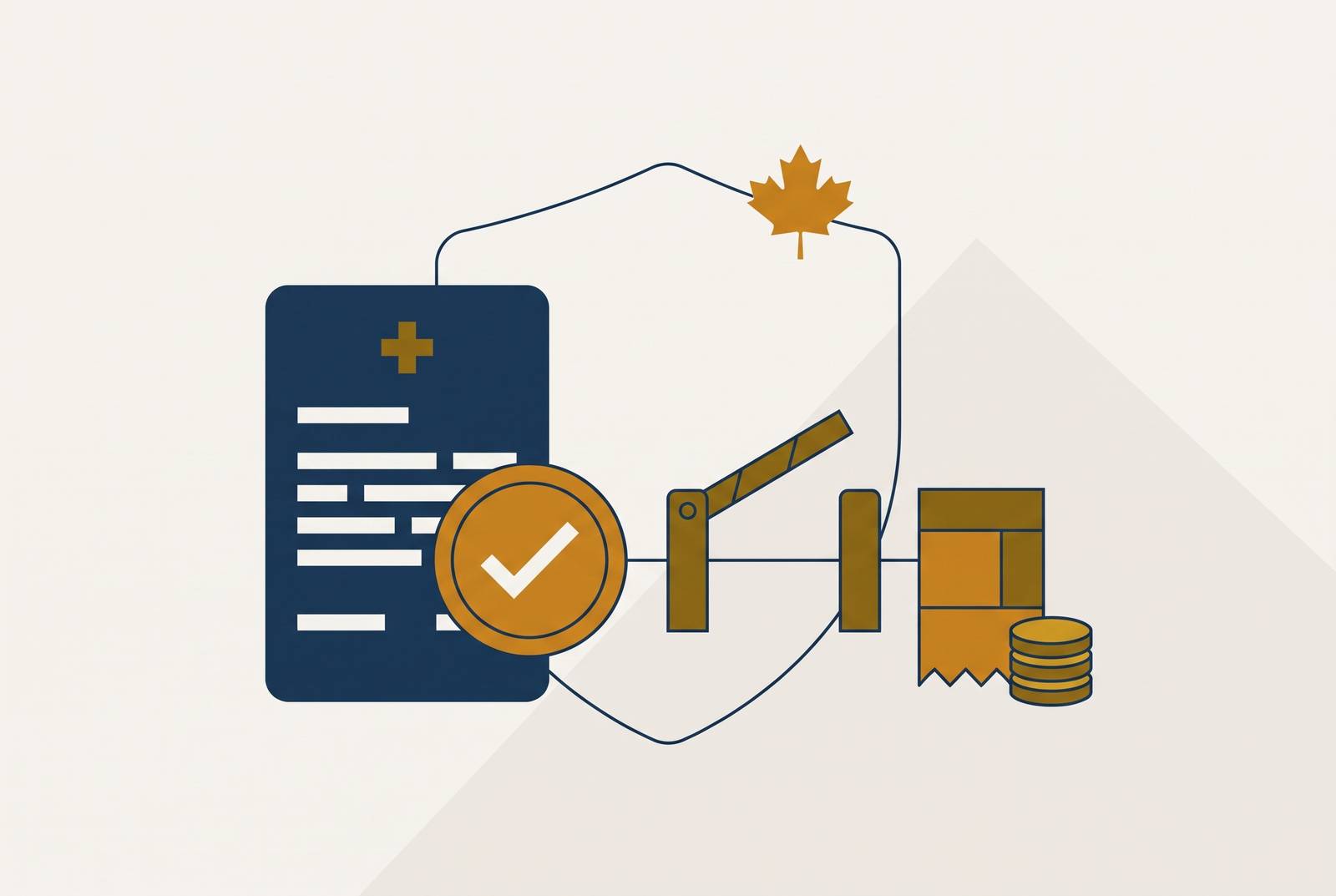
A pay-as-you-go HSA for a Canadian small business can provide tax-free federal reimbursements only if it qualifies as a Private Health Services Plan. Approval-triggered billing supports that structure by tying invoices to approved, incurred claims, but the employer still needs a binding plan in place before expenses arise. Pre-funding is also allowed, so when the employer pays does not by itself decide whether the plan meets the rules.
Why the "Health Spending Account" label alone does not determine tax treatment
Canadian tax law contains no standalone definition of “Health Spending Account.” HSA, HCSA and Health Care Spending Account are product names, often used interchangeably. The legal test is different. Tax treatment depends on whether the arrangement qualifies as a Private Health Services Plan under the Income Tax Act. An employer relying on the name without examining the structure risks reassessment when CRA looks beyond the label.
That distinction puts provider selection in perspective. A reimbursement service can collect receipts and arrange payments without meeting all the rules needed for PHSP treatment. The employer’s obligation, the expenses covered and the employment relationship all need to withstand scrutiny. Billing is part of that structure.
The four CRA tests a PHSP must satisfy before any billing question arises
The first requirement is that the plan be in the nature of insurance. It must contain an undertaking to compensate someone for a loss arising from an uncertain future event. The obligation must be in place before the expense arises. The party that must pay has to take on real risk before it knows whether help will be needed. Both insurer-backed and self-insured arrangements can qualify, though the latter depend on careful documentation and consistent operation.
The second requirement is the “all or substantially all” test. CRA requires that, for a self-insured plan, ninety percent or more of benefits paid to employees during the calendar year be for expenses eligible under the Medical Expense Tax Credit. The calculation concerns payments across the whole plan. Each employee’s unused allowance is left out of that calculation. Payments for ineligible expenses can cause the plan to fail if they push the eligible share below that threshold.
The third requirement defines the expenses themselves. Section 118.2(2) of the Income Tax Act sets out eligible medical, hospital and connected expenses, using the same list as the tax credit. Common categories include dental care, prescriptions, vision care, physiotherapy, mental health services, fertility treatment and qualifying medical devices. General wellness spending does not automatically qualify. Gym memberships, purely cosmetic surgery, over-the-counter vitamins and general wellness programs fall outside the eligible categories described here.
The fourth requirement is a written plan applied according to its terms. It must name the employer, the employees or employee classes that are eligible, the dependants who are covered, the annual limits and the rules for claims. Different classes may have different benefit limits. Those distinctions must be established in advance and applied consistently. These four conditions work together, so a sound billing process cannot rescue a plan that fails elsewhere.
What approval-triggered billing actually means and how the reimbursement cycle works
With approval-triggered billing, the employer gets an invoice only after a claim has been submitted and has passed review. The sequence starts before anyone needs reimbursement. The business sets an annual limit for each employee or employee class before the plan year begins. An employee then incurs an eligible medical expense, pays it out of pocket and keeps the receipt and required supporting documents.
The employee submits those documents through the administrator’s portal or claims process. The administrator checks the expense against both the plan terms and CRA’s eligible-expense rules. Approval leads to reimbursement, typically by direct deposit or EFT. The employer is then invoiced for the specific, adjudicated expense and administration fee.
That differs from pre-funding, but pre-funding is not inherently disqualifying. An accepted way to run a pre-funded plan is to hold money in a trust account until an approved claim is paid. A fund-on-demand structure deposits and withdraws money once the claim is processed, leaving a zero balance between claims. Both structures still need the plan obligation to be in place. The decisive distinction is between fulfilling an advance commitment and making a discretionary payment after seeing a receipt.
Why approval-triggered billing satisfies the "insurance" requirement — and when it does not
The strongest objection is straightforward. If an employer funds only claims that have already been reviewed, it knows the amount before paying. Nothing appears uncertain at the invoice stage. That can look more like settling a bill than providing insurance, particularly when the business owner is also the only person claiming benefits.
The answer turns on when the obligation begins. Under a properly structured plan, the employer commits before expenses arise to cover eligible claims up to a fixed annual limit. It does not yet know whether employees will incur those expenses or how much they will claim. That is the relevant uncertainty. Approval turns an existing contingent obligation into a specific payment.
A fixed annual limit reinforces that distinction. The employer knows its maximum exposure, while the events that trigger payment remain uncertain. A limit that cannot be changed mid-year also prevents the commitment from being rewritten as claims emerge. By contrast, an employer that simply agrees to reimburse receipts without a prior plan has not established the same insurance undertaking.
However, this reasoning does not make every approval-triggered arrangement a PHSP. CRA Technical Interpretation 2014-0521301E5 considered a corporation’s cost-plus plan for its sole shareholder-employee, with third-party adjudication before invoicing. CRA concluded that such a plan “would not likely constitute a plan in the nature of insurance.” Independent review and after-approval billing do not, by themselves, resolve the insurance question in a sole shareholder-employee arrangement.
Eligibility follows the written terms and CRA rules rather than the employer’s preference after learning the cost. The employer cannot selectively treat an otherwise eligible claim as optional without departing from its commitment. Independence supports a genuine advance undertaking, but does not prove every other condition has been met.
The tax consequences when the structure holds — and when it breaks down
A qualifying PHSP generally lets the corporation deduct reimbursements and reasonable administration fees as business expenses. Employees receive the reimbursements tax-free federally, without including them on their T4 or reporting them as income on their return. In the reimbursement model, the deduction arises when an actual claim is paid.
Outside a qualifying PHSP, a medical reimbursement can be a taxable employee benefit. CRA’s payroll guidance uses reimbursement for prescription drugs outside a PHSP to illustrate that result. An eligible medical expense is not enough. The corporation may also lose its deduction, and a shareholder benefit reassessment under section 15(1) of the Income Tax Act can bring additional tax, penalties and interest.
Quebec requires a separate provincial calculation even when the federal treatment holds. Employer-paid PHSP coverage is a taxable employee benefit provincially. Revenu Québec calculates the value for a plan not backed by insurance using benefits paid and administration expenses, each apportioned by the employee’s coverage days relative to total coverage days, less employee contributions. Employers should work through the applicable treatment with their accountant rather than assume “tax-free” means the same result everywhere.
Can an incorporated business owner use a PHSP, and what decides eligibility?
An incorporated employer with arm’s-length employees presents the clearest case. It can establish employee classes with different limits when those classifications are reasonable, documented and consistently applied. Owner-employees require a closer look. The basis for an owner-employee’s benefit, whether employment or share ownership, requires examination beyond incorporation alone.
An owner actively working in the corporation and receiving T4 employment income can generally receive PHSP benefits as an employment benefit, subject to the plan qualifying. A dividend-only compensation structure presents a serious risk. Dividends do not establish the employment basis needed for that treatment, and CRA can characterize the reimbursement as a shareholder benefit under section 15(1).
Nor does salary alone settle every question. The nature of the employment relationship and the reasonableness of the benefit still require examination, especially given CRA’s position on sole shareholder-employee cost-plus arrangements. The appropriate salary level is fact-dependent. Province, claim level and overall compensation structure belong in that discussion with the accountant.
CRA warns that an HSA arrangement marketed to a sole proprietor without arm’s-length employees is not a qualifying PHSP and its payments are not deductible business expenses. The arrangement described here requires at least one genuine arm’s-length employee, with all qualified employees included. Separately, qualifying self-employed individuals may deduct premiums under an eligible PHSP contract, subject to its own conditions and deduction limits. That is not the same as opening a self-insured HSA.
For incorporated businesses, CRA does not impose a fixed dollar cap on PHSP claims. The benefit must instead be reasonable given the employment relationship and the business’s circumstances. That standard makes the choice of the plan’s own annual limit part of the employment-benefit analysis.
How plan documentation ties the billing model to CRA compliance in practice
The plan document gives adjudication its authority. It identifies who is covered, including dependants, and defines the employee classes, limits and claim procedures. It also establishes the commitment to cover future, uncertain medical expenses. Without that advance commitment, an invoice issued after approval records a payment process but does not establish an insurance undertaking.
The document must therefore connect the promise to its boundaries. Annual limits are set before the plan year and must stay fixed mid-year, and the rules for expenses follow section 118.2(2). A retrospective document is a warning sign. Writing a plan after claims arise points towards discretionary reimbursement.
An optional third-party administrator’s practical value for a self-insured PHSP is separating claim decisions from the employer’s after-the-fact judgment about what to fund. Records then show whether that separation worked. The written plan, eligibility decisions, receipts, adjudication records and reimbursement records support the deduction and the claimed employment-benefit treatment. Annual administrator reporting provides an audit trail for those positions.
The practical steps a Canadian employer should take before relying on PHSP tax treatment
The employer and accountant should treat setup as a shared compliance checklist, beginning with the employment relationship. Before enrolling or submitting claims, an incorporated owner should check whether the benefits would come from employment or share ownership. T4 income and dividend-only compensation need explicit discussion. For a sole shareholder-employee, whether the arrangement constitutes insurance also needs attention rather than an assumption that independent billing resolves it.
Next, they should set employee classes and reasonable annual limits before the plan year starts. Those decisions belong in the written plan. They should then choose an administrator that offers independent adjudication and ties invoices to approved, incurred claims, instead of one that funds the plan on an automatic schedule without regard to claims. The administrator should be able to explain how decisions follow the plan and CRA rules.
Records and annual review complete the process. The employer should keep the plan and the records that support claims for as long as CRA can reassess, and file the administrator’s annual reports with the corporate records. At year-end, the employer and accountant should confirm that ninety percent or more of benefits paid across the plan were for eligible expenses. Any wellness account or other non-PHSP benefit should remain structurally separate so that its payments do not undermine that ratio.
Provider enrolment is not a tax ruling.