PHSP Cost Deductibility for Professional Corporations in Alberta and Ontario
Structuring the plan correctly saves the deduction; missing one requirement costs you all of it.
A physician and a dentist who both run their practice through a professional corporation are asking the same question every fall: should the corporation pay for medical expenses directly, or should the owner keep paying out of pocket and claiming what's left on a personal return? That question sits differently for a professional corporation than it does for almost any other business, because the owner and the employee are the same person. Every dollar routed through a private health services plan carries both a corporate tax consequence and a personal compensation consequence at once, and getting the structure wrong doesn't cost a little efficiency. It can cost the whole deduction.
Alberta and Ontario sharpen that question because the corporate tax rate a professional corporation pays determines how much a PHSP deduction is actually worth. A dollar deducted at a higher corporate rate saves more tax than a dollar deducted at a lower rate, so the province a corporation operates in changes the math behind every PHSP decision. Ontario made that math move in 2026, when a legislated change to its small-business corporate tax rate took effect partway through the year. Alberta's rate structure, meanwhile, has stayed put. Both provinces reward a properly structured plan, but the size of that reward isn't identical, and it isn't static either.
How a PHSP Moves Money from Corporation to Employee
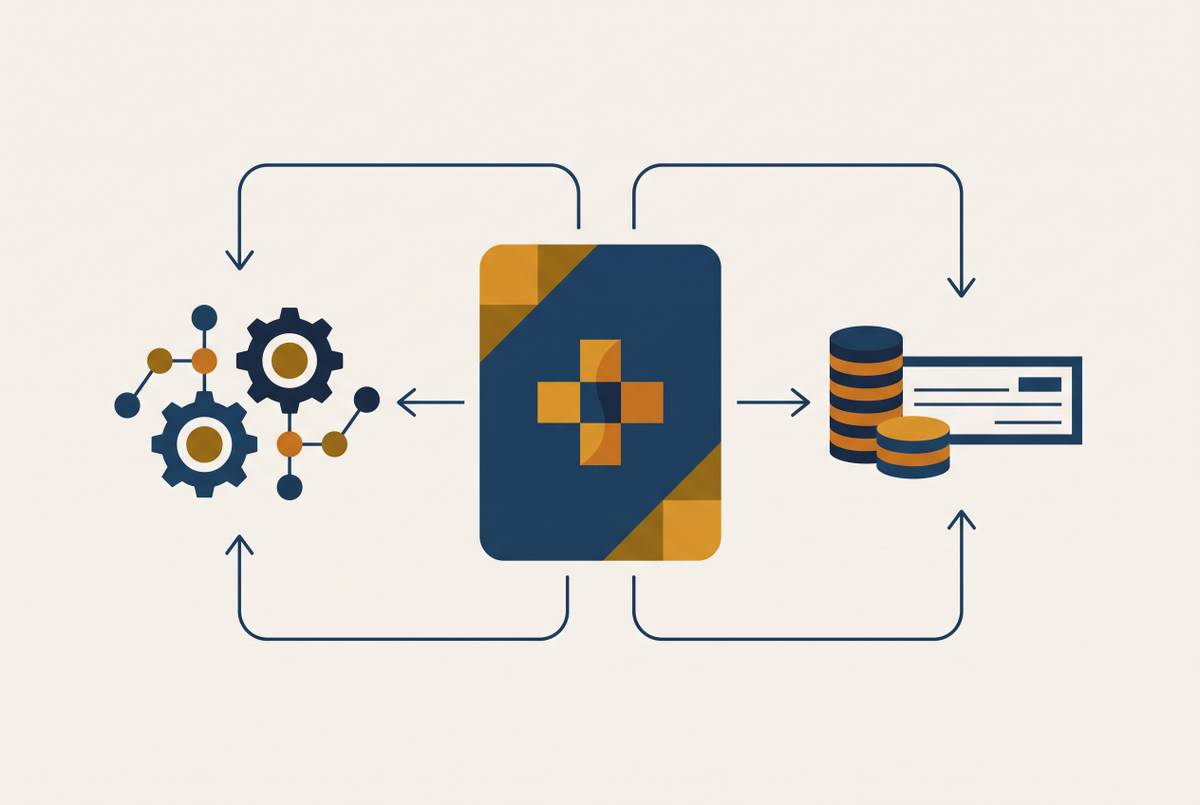
A private health services plan works as a reimbursement loop with a specific order of operations, and understanding that order matters before any compliance question can make sense. Picture a dentist visit. The employee, who in a professional corporation is usually also the owner, pays the dental bill out of pocket and keeps the receipt. That receipt goes to a plan administrator, not back to the corporation directly. The administrator reviews the claim, reimburses the employee, and then bills the corporation for the amount paid plus an administration fee.
The corporation then deducts the full amount as a business expense, both the reimbursement and the fee. Nothing about that reimbursement touches the employee's T4. It isn't included in taxable income, and unlike a raise in salary, it carries no CPP or EI implications on either side. A salary increase gets taxed as income and triggers payroll deductions. A PHSP reimbursement for an eligible medical expense moves from corporation to employee without either of those costs attaching to it.
Eligibility is defined by what CRA calls medical and hospital expenses eligible for the medical expense tax credit, plus certain connected expenses, or some combination of the two. At least 90% of the premiums paid into the plan need to relate to expenses that would qualify for that credit. Dental and orthodontic treatment, prescription drugs, medical devices, and vision care including laser eye surgery all fall inside that scope.
How CRA checks that 90% threshold depends on how the plan is built. For an insured plan, CRA looks at the proportion of premiums paid. For a self-insured plan, CRA looks at the proportion of benefits actually paid out to employees over the calendar year. PHSP claims are deductible in the corporate fiscal year they're paid. A corporation coming off a strong profit year can accelerate eligible expenses before fiscal year-end and capture the deduction when it's worth the most.
What qualifies and disqualifies a plan as a PHSP
CRA treats PHSP qualification as an all-or-nothing test. A plan either meets every required condition at once, or it doesn't qualify as a PHSP. There's no partial credit for a plan that satisfies most of the requirements. Missing one condition produces the same outcome as missing all of them: no deduction.
The conditions themselves are specific. Every expense covered under the plan has to be a medical, hospital, or connected expense. At least 90% of premiums need to tie back to expenses eligible for the medical expense tax credit. And the plan has to function as an actual plan of insurance: a genuine element of risk has to exist inside it. That insurance element is what separates a real PHSP from a corporate reimbursement arrangement that's been labeled a PHSP without actually behaving like one.
That third condition is where professional corporations run into trouble, because most of them are built around a single owner-employee. CRA's long-standing position, most recently reiterated in a 2022 interpretation and first stated in a 2014 technical interpretation, holds that a cost-plus plan set up for a sole employee-shareholder doesn't qualify as a PHSP, because it lacks the necessary elements of insurance. The 2014 guidance made the same point directly: a cost-plus plan reimbursing a sole employee-shareholder doesn't contain the risk-sharing structure that insurance requires.
The logic behind that position is straightforward once you see the mechanics. Insurance works because risk is pooled, and nobody knows in advance which members of the pool will file claims. In a one-person structure, where the owner is also the only covered employee, there's no pooling and no uncertainty. The corporation is simply reimbursing the same person's expenses every time, with no risk being transferred anywhere. CRA's interpretations treat that absence of risk-shifting as disqualifying, not as a minor technical gap. A professional corporation that falls into this position doesn't lose part of its deduction. It loses all of it, and the individual may have to include the full reimbursed amount in personal income.
A second path to disqualification runs through shareholder benefit rules. Even where a PHSP structure technically exists, CRA can look at who actually receives the benefit and in what capacity. If the benefit flows to someone because they're a shareholder, rather than because they're an employee performing a job, CRA can reclassify it as a shareholder benefit under subsection 15(1) of the Income Tax Act. That reclassification strips the corporation of its deduction and adds the full amount to the individual's personal income, reversing every tax advantage the PHSP was built to create.
This risk concentrates in one specific scenario: an owner who takes no T4 salary. Dividends-only compensation is a signal CRA reads as shareholder status, not employment status, and a PHSP benefit flowing to someone without an employment relationship has nothing to attach itself to.
Structuring a PHSP that survives CRA scrutiny
The disqualification risk tied to sole shareholder-employees is addressable. The work involves demonstrating, through concrete and documented facts, that PHSP benefits flow to the owner as an employee.
That demonstration starts with T4 salary. A genuine employment relationship between the professional and the corporation has to exist, and the clearest evidence of that relationship is T4 employment income, not dividends alone. A compensation structure built entirely on dividends removes the employment relationship the PHSP depends on, no matter how well the plan itself is documented. The salary doesn't need to cover the full compensation package. It needs to exist, and it needs to be reasonable given the role and the benefits the plan provides. What counts as reasonable depends on the individual's province, the full shape of their compensation, how much the PHSP pays out, and how CRA would be likely to characterize the relationship on review; a qualified accountant or tax professional is best positioned to make that determination.
Third-party administration matters next. The Income Tax Act recognizes a PHSP as a non-taxable employee benefit once it meets the Act's qualifying conditions, and while third-party administration isn't a blanket statutory requirement for every incorporated employer, CRA strongly recommends it and requires it for unincorporated businesses. A professional corporation that reimburses its own owner-employee informally, without an administrator processing claims and billing the corporation at arm's length, is building a weaker record of the kind CRA looks for on review.
Documentation closes the loop. The corporation's obligation to reimburse needs to be written into employment agreements and backed by a board resolution laying out the plan's terms, because that paperwork is what separates a legitimate compensation arrangement from an after-the-fact expense claim dressed up as one. That resolution should spell out which classes of employee are covered, what the annual benefit limits are, and which categories of expense qualify. Limits need to be set prospectively, at the start of each plan year. Adjusting a limit mid-year to absorb a large unexpected claim, or setting a limit that applies only to the owner with no defined employee class behind it, is the kind of pattern that draws CRA attention. Where a professional corporation employs others besides the owner, the benefit structure has to stay reasonable and consistent across employee classes. CRA's standard is that a shareholder-employee's benefits should look comparable to what an arm's-length employee doing similar work would receive.
Contribution limits work differently for incorporated structures than for sole proprietors. A sole proprietor with no arm's-length employees faces a fixed per-adult annual cap of $1,500, figures Ownr has published show. Incorporated owners with a properly structured PHSP aren't bound by that fixed cap, but the limits the plan sets still have to be applied consistently from year to year and documented clearly enough to withstand review.
Corporate tax rates and the value of the PHSP deduction in Alberta and Ontario
The PHSP deduction's value scales directly with the corporate tax rate it's claimed against, and that's precisely why Alberta and Ontario produce different planning math.
Alberta applies a lower combined rate to active business income up to the small-business threshold, and a higher combined rate to income above that threshold. A professional corporation deducting PHSP costs at the general rate captures a bigger tax saving per dollar than one deducting at the small-business rate, because the after-tax cost of providing the benefit drops as the applicable rate climbs.
Ontario's structure moved in 2026. Through June 30 of that year, Ontario's combined small-business rate ran higher than Alberta's. A legislated provincial rate cut, tabled March 26, 2026, took effect July 1, 2026, and brought Ontario's combined small-business rate down to 11.2%. Ontario's general rate, the one applying to income above the small-business range, remains higher than Alberta's general rate.
The practical effect splits by tier. At the small-business rate tier, Alberta and Ontario now sit close to parity, a gap that used to favour Alberta has narrowed since the Ontario cut took hold. At the general rate tier, the comparison still favours Ontario, where corporations claim a larger deduction value than their Alberta counterparts at that level of income. A professional corporation that set its compensation and PHSP strategy before July 2026 has a real reason to revisit that plan now, since the rate it was built around may no longer describe current conditions.
The core comparison that makes a PHSP worth considering in the first place doesn't change between the two provinces. Paying eligible medical expenses through a PHSP at the applicable corporate rate is substantially more tax-efficient, in Alberta or in Ontario, than paying those same expenses out of after-tax personal income, which has to clear the medical expense tax credit threshold before any credit applies.
The internal inconsistency in CRA's published guidance
CRA's own published material doesn't speak with one voice on this question, and professional corporations are better served understanding that tension than pretending it doesn't exist. The 2022 interpretation and the 2014 technical interpretation both state that a cost-plus PHSP built for a sole employee-shareholder fails to qualify, because it lacks the insurance element a real PHSP needs. CRA's Guide T4002, covering self-employed business, professional, commission, farming, and fishing income, discusses PHSP premium deductibility for sole proprietors with no employees, and its examples point toward deductibility being available in that same structure the interpretations seem to rule out.
Practitioners have pointed to that gap when defending PHSP structures under audit, arguing that CRA's own guide acknowledges a deductibility its formal interpretations appear to deny. That argument has real substance, but it isn't a shortcut. Sustaining it through a CRA review takes professional support, and even with that support, it doesn't remove the risk of reassessment.
None of this changes what a professional corporation actually needs to do. CRA's guidance being inconsistent in places means the risk of an audit challenge is real without being guaranteed, and that kind of grey area rewards careful structuring over improvisation every time. A plan built on a genuine employment relationship, backed by T4 salary, run through third-party administration, and documented with limits set prospectively at the start of each plan year, stands on firmer ground during a review than a plan that leans on the T4002 ambiguity and little else. The deduction is available. A well-structured plan survives contact with CRA; a poorly structured one doesn't.
Sources
- Medical expenses, including payments from a private health services plan (PHSP) - Canada.ca
- Private Health Services Plan Right for My Professional Corporation?
- Other business expenses - Canada.ca
- Private Health Services Plan Premiums Deductibility
- 25 June 2014 External T.I. 2014-0521301E5 - PHSP - employee-shareholder